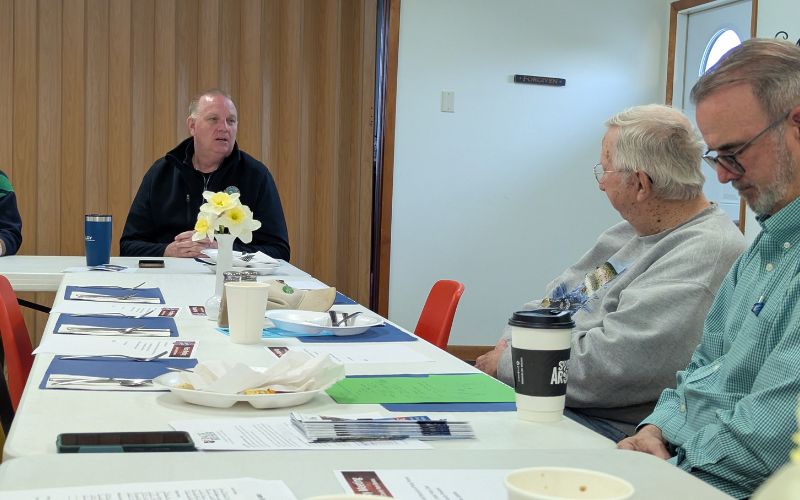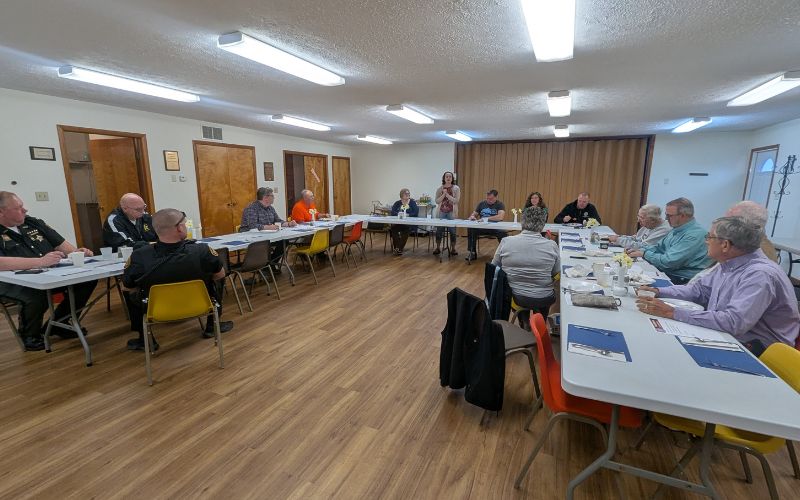
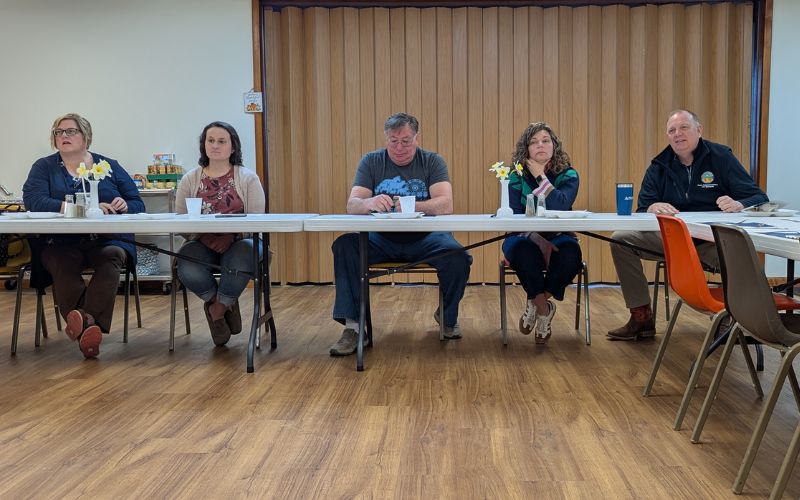
The Logan County Farm Bureau gathered Monday morning at Hopewell Methodist Church in Bellefontaine for its annual policy development meeting, bringing together members, local leaders, and elected officials to discuss priorities and concerns for the year ahead.
The meeting serves as the first step in shaping the organization’s policy agenda, allowing participants to surface ideas and address issues impacting agriculture and rural life at the county, state, and national levels.
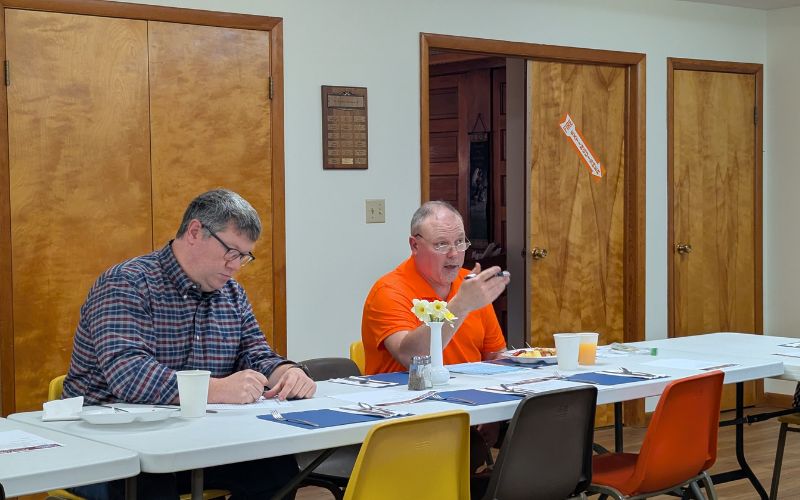
Logan County Engineer Scott Coleman highlighted several infrastructure-related concerns, including the importance of preserving the role of the county engineer’s office.
He also referenced legislation such as Senate Bill 219, which deals with Road Use Maintenance Agreements, and emphasized the importance of “Call Before You Dig” requirements.
Logan County Sheriff Randy Dodds reported increased traffic concerns on Township Roads 216, 179, and 200, where semi-trucks have reportedly been traveling off designated routes.
Dodds also noted a potential opportunity for additional county revenue, as the Logan County Jail may begin housing up to 50 inmates from neighboring Clark County, where jail capacity has been reached.
Logan County Dog Warden Jake Boyd provided an update on the county animal shelter, reporting that operations are running smoothly and the facility is currently about half full.
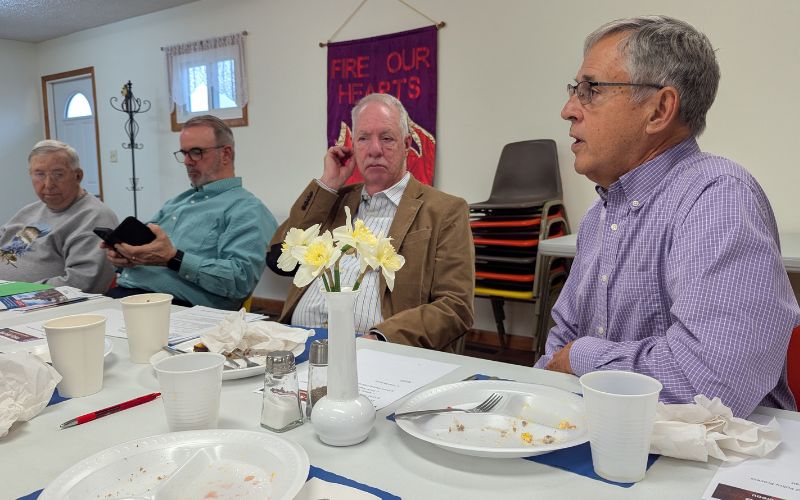
Representatives from the Logan County Land Trust also attended the meeting, raising concerns about the potential development of data centers in the area.
Linda Vernon, President of the Logan County Land Trust, suggested forming a local committee to help guide decisions and protect farmland.
The group reiterated its mission to preserve agricultural land and emphasized the importance of considering conservation easements when planning utility projects.
Concerns were also raised about policies from the Ohio Department of Agriculture that could make it easier to violate those easements.
Logan County Commissioner Joe Antram expressed optimism heading into the spring planting season but noted that mental health remains an ongoing concern for farmers.
He also said the condition and future of the Logan County Fairgrounds continue to be a topic of discussion among commissioners.
Antram praised the work of the Ohio State University Extension as a vital resource for the community and stressed the importance of maintaining programs such as CAUV and H2Ohio.
While he said commissioners support property tax reform, he cautioned that eliminating property taxes entirely would be devastating for local government.
He also encouraged the state to review the “20-mill floor.”
Antram added that farmers are seeking fair market prices—not government handouts.
Logan County Auditor Jack Reser voiced concerns about House Bill 186 and the 20-mill floor, while also noting that residents can expect some relief on their upcoming property tax bills.
According to Reser, taxpayers will see an estimated credit of $75 per $100,000 of property value on the second half of their tax bill.
Reser emphasized the importance of maintaining checks and balances in county government and expressed support for restoring the homestead tax credit to its previous usage, not the current state.
He also urged the Farm Bureau to oppose Senate Bill 42 and voiced support for House Bill 520, which he said would strengthen county operations.
State Representative Tim Barhorst attended the meeting and echoed concerns about data center development, encouraging residents to voice their opinions early in the process.
Barhorst also suggested that regional airport expansion could become a possibility as development increases and stressed the importance of keeping decision-making local.
Additional concerns discussed during the meeting included the reliability and future of power infrastructure in Ohio, an issue participants described as ongoing.
Jill Smith, Senior Organization Director, and Allison Melvin, Public Policy Chair, spoke after the meeting about where the concerns go from here:
The policy meeting marks the beginning of the Farm Bureau’s annual process to develop and refine policies that will guide advocacy efforts at higher levels throughout the coming year.