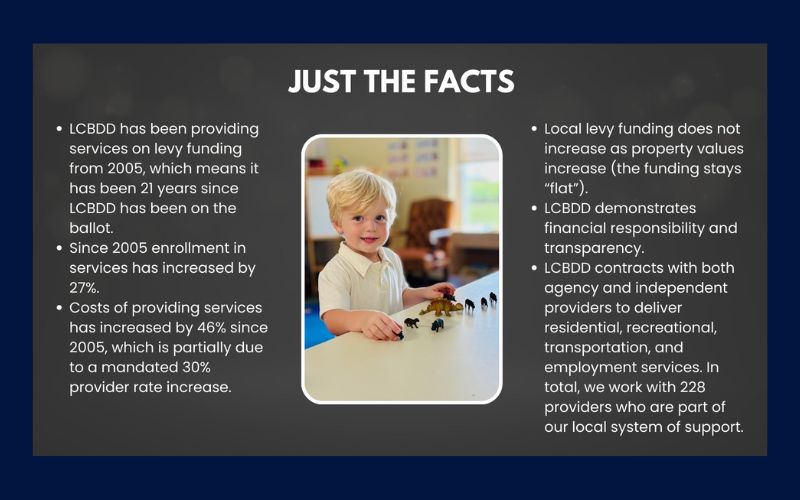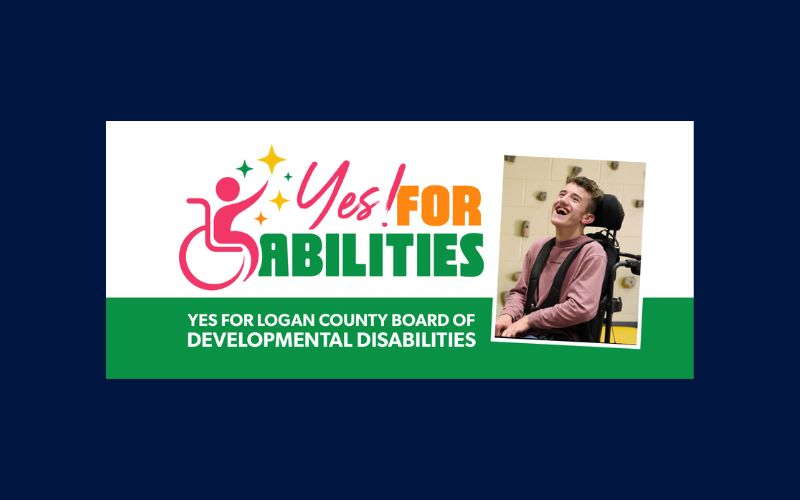
Voters in Logan County will see a new tax issue on the ballot this May to support programs and services for individuals with developmental disabilities.
The proposed levy would generate an estimated $6 million annually, according to the county auditor’s office.
The rate would not exceed 2.75 mills per $1 of taxable value — roughly $96 for every $100,000 of a home’s market value.
If approved, the levy would run for five years, starting in 2026, with the first payment due in 2027.
Officials say the funds would go directly to services that help people with developmental disabilities live safely, build skills, and participate fully in the community.
Krista Oldiges, Superintendent of the Logan County Board of Developmental Disabilities, and Lorettta and Taylor Stroud joined News Director April King on Sunday morning on 98.3 WPKO for Listen Up! to talk more about the levy:
The levy supports a wide range of programs, including:
- Health and safety services: Case management, 24-hour on-call support, and monitoring to ensure proper care.
- Employment programs: Skill-building, job training, and career development opportunities.
- Community engagement: Recreational programs like Special Olympics, volunteer opportunities, and school or community connections.
- Behavioral and mental health support: Services for children and adults needing extra assistance.
- Medicaid waiver services: Personal care, day programs, home modifications, and transportation.
- Early intervention and preschool programs: Therapy and developmental support for children from birth through age 5, including occupational, physical, speech, audiology, and vision services.
The Friends of the Logan County Board of Developmental Disabilities emphasize that the levy ensures local residents with developmental disabilities have the resources to participate fully in everyday life.
Residents looking for more information about the levy or the programs it funds are encouraged to contact the Logan County Board of Developmental Disabilities.
Voters will have the opportunity to cast their ballots for or against the measure during the May election.