Maple syrup season arrived quickly—and in full force—for one local producer, and recently I spent some time learning all about the process.
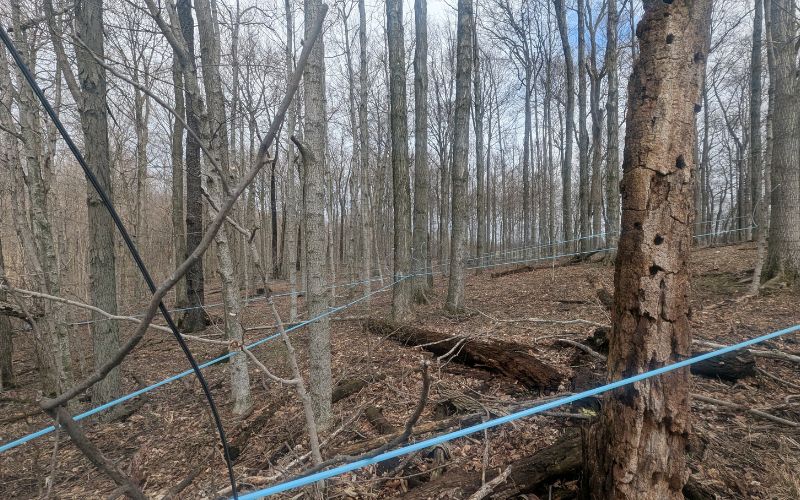
At Wishwell Farms just outside Bellefontaine, Joel Wish saw sap flowing almost all at once from more than 700 maple trees, turning a short window of ideal weather into a highly productive stretch.
In just a few weeks, that surge produced more than 600 gallons of maple syrup.
Wish has more than 1,300 taps set across his trees.
The process begins in late winter when temperatures rise above freezing during the day and drop below freezing at night—conditions that create pressure inside the trees and cause sap to flow.
Small holes are carefully drilled into the trunks, and spouts—known as taps—are inserted to collect the sap, often through a network of tubing that carries it back to a central collection point.
From there, the sap is processed using a reverse osmosis system, which removes a large portion of the water before boiling.
This step increases efficiency and reduces the amount of time and fuel needed during evaporation.
After that, the concentrated sap is moved to an evaporator, where it’s boiled down over heat.
It takes roughly 40 gallons of sap to produce just one gallon of maple syrup, as the remaining water is evaporated off, leaving behind the rich, amber-colored syrup.
Producers must carefully monitor temperature and density to ensure quality and consistency.
At the heart of the operation is Wish’s sugar shack—housed in a building with deep roots.
He has transformed his family farm’s former milk parlor into the space where much of the syrup production now takes place, blending tradition with modern efficiency.
Wish talks about the different grades of syrup and why he chose to produce the syrup:
Wish’s brother, Jason, who is also a farmer, has a YouTube Channel for the farm, and about a year ago, produced a video highlighting his brother’s maple syrup:
For Wish, producing is in his blood. He grew up on the farm and comes from a long agricultural background, making maple syrup production a natural extension of the work he’s known his entire life.
Maple syrup also varies in grade and color, ranging from lighter, more delicate golden syrups to darker varieties with a stronger, more robust flavor.
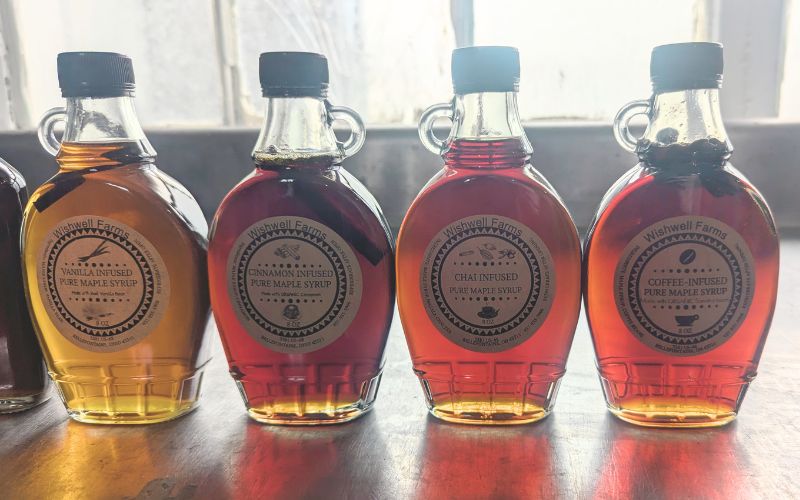
Wish produces a range of these natural variations and has expanded his offerings by creating infused syrups as well.
Some of his specialty flavors include coffee, vanilla bean, chai, and cinnamon-infused maple syrup, alongside his traditional, regular option.
Despite the fast-paced season this year, Wish says it’s work he truly enjoys.
From tapping the trees to boiling the sap, he takes pride in every step of the process—and in producing a local product that’s as sweet as it is time-honored.