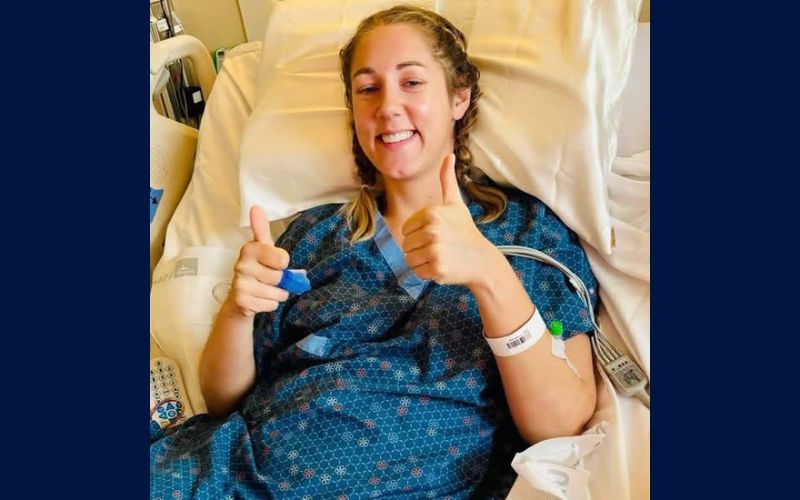
One year ago, Shelby Mann of Jackson Center was involved in a serious farm equipment accident that left her trapped inside a piece of farm machinery along State Route 274 near the Shelby County line.
Now, Mann is sharing her story after making a nearly 100% recovery and reflecting on the first responders who helped save her life.
The accident happened October 29, 2025.
Emergency crews from Indian Lake EMS, Lakeview Volunteer Fire Department, and the Indian Joint Fire District responded.
They worked alongside Washington Township Police, Russells Point Police, and the Logan County Sheriff’s Office to safely free her from the machinery.
CareFlight flew Mann to Miami Valley Hospital in Dayton with serious but non-life-threatening injuries.
In a statement released one year after the accident, Mann details what happened that day, her lengthy recovery, and why she now sees local emergency services differently.
Her statement comes as voters in the Indian Lake Joint Ambulance District consider an additional five-year property tax levy for emergency medical services.
Below is Mann’s statement in its entirety.
When Seconds Matter: A Farmer’s Perspective on Emergency Response
Dear Indian Lake Joint Ambulance District Voters,
Growing up in agriculture, you learn early that farming is a dangerous occupation. Yet, when you work around heavy machinery every day, you become comfortable with the risks. You convince yourself that serious accidents happen to other farmers, not to you.
On October 29, 2025, that changed for me.
Following a grain cart malfunction, I was shoveling corn into a corn head. For just a moment, I looked forward instead of down. I stepped too close to the running head, and as I pivoted to get another scoop, the machine caught my jeans and pulled my leg inside.
In an instant, my leg was pinned between pieces of heavy metal designed to pull in and destroy corn stalks.
Our farm’s service truck is equipped with just about every tool you could imagine. We’re accustomed to fixing things ourselves and finding solutions when equipment breaks down. But in that moment, we didn’t have a single tool capable of doing what needed to be done.
Our local mechanic happened to be at the field with his service truck, too. With tears in his eyes, he turned to my family and said, “I don’t have anything to get her out.”
We had the tools, the mechanical knowledge, and the willingness to do whatever it took. But none of it was enough.
Thankfully, our first responders had what we didn’t.
I’ll admit that before my accident, I didn’t fully appreciate our local emergency services. I viewed small-town police officers as people looking to write tickets and volunteer fire departments as something of a good old boys’ club.
That perspective changed the day those men and women showed up to save my life.
First responders placed one Jaws of Life at the top of the corn head. When it wasn’t powerful enough to separate the machinery, they brought in a second Jaws of Life and positioned it at the bottom. Working together, the two tools created enough separation for rescuers to free my leg.
And it wasn’t just the equipment that mattered. Before I was even freed from the machine, a paramedic had already started an IV and was providing the medical care I desperately needed.
In the middle of a situation that felt impossible, these first responders had the training, equipment, and composure to act.
Farming doesn’t stop at county lines, and neither do emergencies.
Jaws of Life rescue equipment is expensive. Purchasing it, maintaining it, and training personnel to use it properly represents a significant investment for any department, especially those serving smaller rural communities.
One Jaws of Life wasn’t enough to free me. It took two. Had those tools not been available, I don’t know how much longer I would have remained trapped—or how different my outcome might have been.
Emergency medical supplies, medications, ambulances, and specialized rescue equipment all come at a cost. While these resources serve different purposes and may be funded through different departments, they are all part of the emergency response that people depend on.
I understand why taxpayers question the expense of emergency services and whether more vehicles need specialized rescue tools. Not every vehicle can carry everything. But my experience showed me why having additional equipment available through responding departments can matter when one tool isn’t enough.
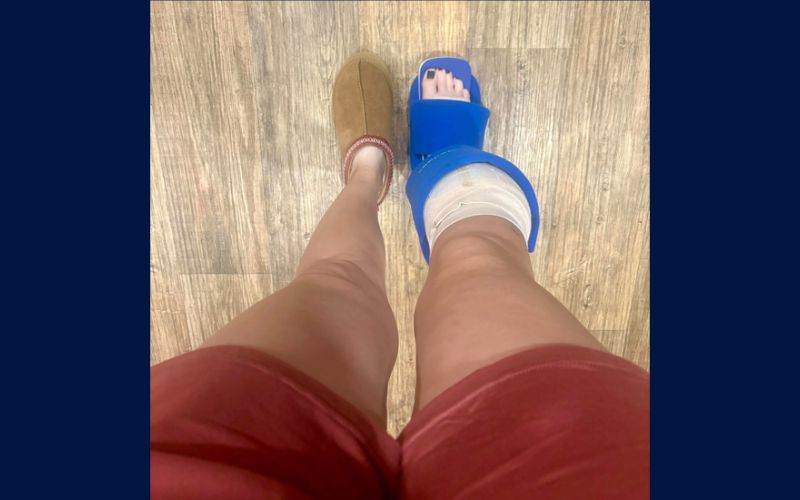
My accident resulted in 16 days in intensive care, five surgeries, and a recovery that has taken nearly a year. I’m finally beginning to have a leg that looks and feels somewhat normal again.
I am here today, able to tell this story, in part because those first responders had the equipment, training, and medical expertise necessary to save me. The Indian Lake Joint Ambulance District was among the emergency services that responded that day, and I experienced firsthand the importance of the care they provide.
On November 3, voters in the Indian Lake Joint Ambulance District will consider an additional five-year property tax levy for emergency medical services. While the levy is not specifically designated for Jaws of Life equipment, I now understand how important it is for our communities to have trained emergency medical personnel, properly equipped ambulances, and the resources necessary to respond when someone needs them.
When we discuss the cost of emergency services, I hope we also consider what those services mean to someone facing a life-threatening emergency.
Because you never think it will happen to you—until it does.
Respectfully Submitted,
Shelby Mann
Mann says she still walks with a limp, but after everything she has been through, she is happy to be alive and grateful for the first responders who helped save her life.