
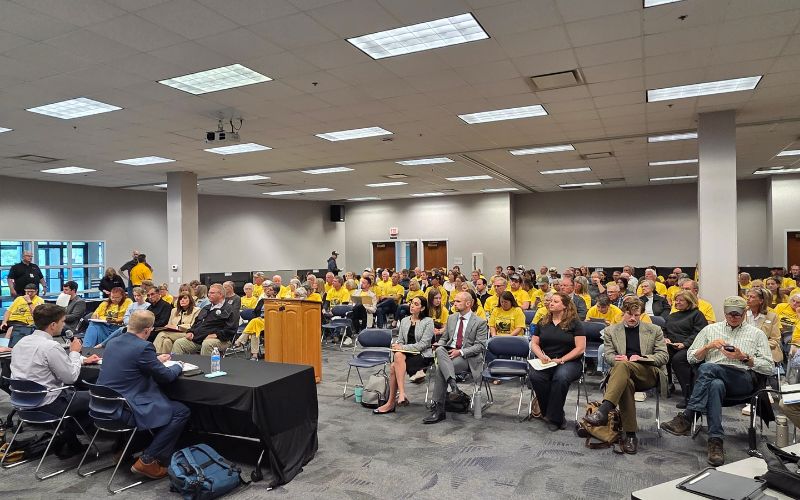
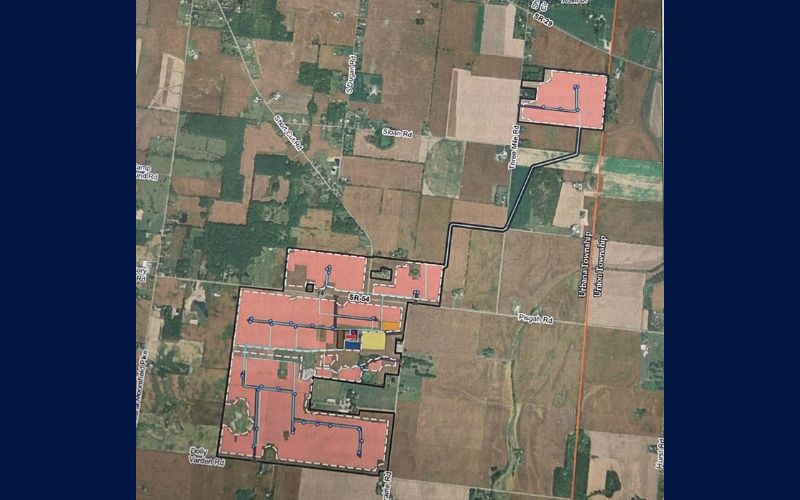
Hillclimber Solar, LLC, a subsidiary of RWE AG, is seeking approval to develop a 156.5-megawatt solar and battery storage facility in Urbana Township in Champaign County. The proposed project would occupy 628 acres within an 846-acre project area and include large arrays of solar panels mounted on tracking systems, battery storage infrastructure, access roads, underground electric collection lines, transformers, and a collector substation.
Project documents state the facility would include setback requirements of at least 300 feet from non-participating residences, 150 feet from roads, and 120 feet from wetlands and streams, along with 7-foot perimeter fencing and gated entrances.
Despite the application advancing to the hearing stage, Ohio Power Siting Board staff has recommended the project be denied. The board is not required to follow that recommendation, but staff concluded the project should not be approved as proposed. The staff recommendation is considered a significant development in the case, as OPSB staff reviews applications for compliance with state standards before making recommendations to the board. If approved, staff recommended 57 conditions be attached to the project, including limits on construction hours, farmland and drainage protections, updated decommissioning plans, complaint resolution procedures, and environmental safeguards.
Much of Wednesday’s testimony centered on the broader debate over balancing Ohio’s future energy needs with farmland preservation and local control. Supporters argued Ohio needs additional power generation as energy demand continues to increase, saying solar projects can be developed more quickly than other sources such as nuclear or natural gas and could help address long-term energy reliability and rising costs. Supporters also pointed to potential tax revenue, lease payments to participating landowners, and broader investment in Ohio’s energy infrastructure.
Opponents largely focused on the project’s footprint and potential effects on the local community. Many residents raised concerns about removing hundreds of acres of productive farmland from agricultural use, potential impacts on neighboring property values, and what they described as threats to the county’s rural character and long-term agricultural future. Additional testimony against the project included concerns about drainage issues, soil compaction, decommissioning costs, neighboring property protections, and the long-term impact of converting farmland to industrial energy use.
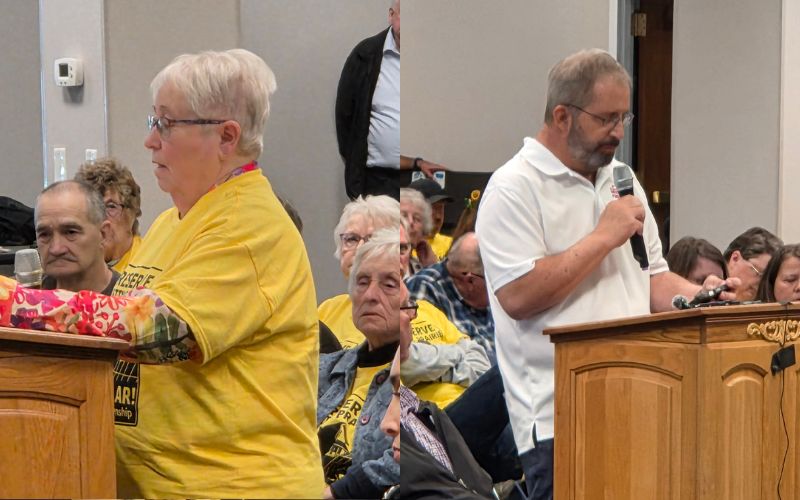
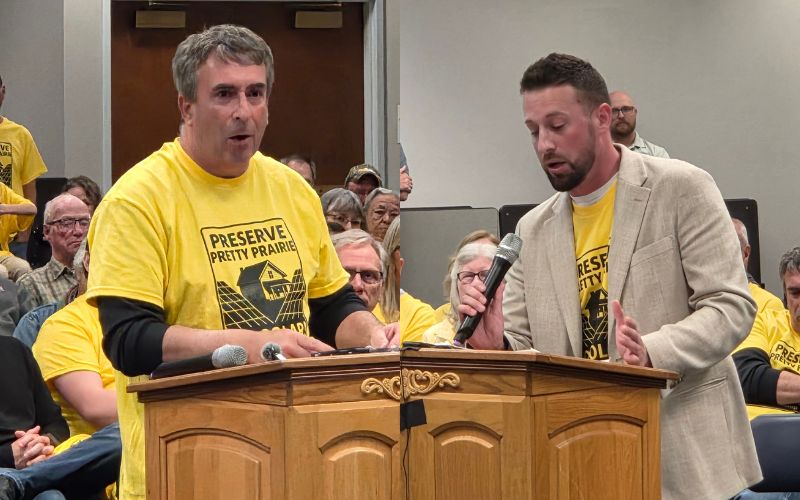
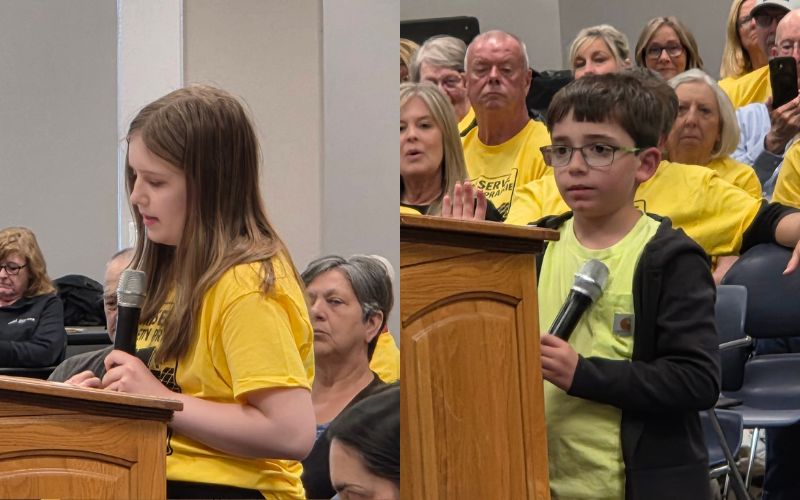
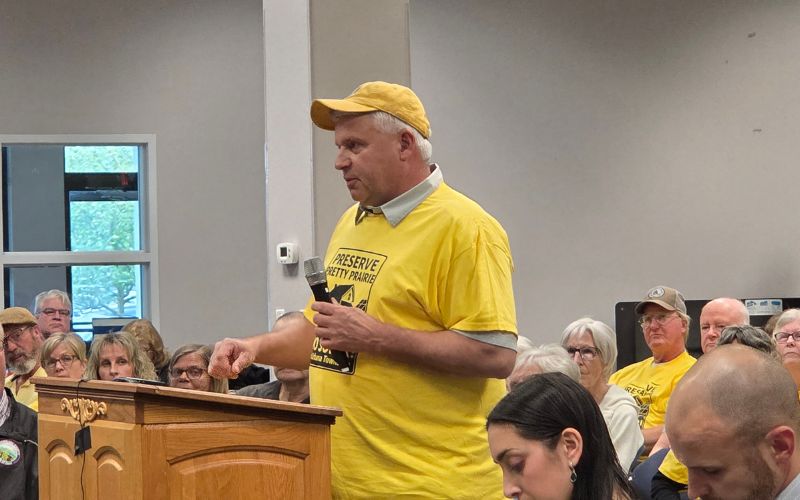
Among those speaking or publicly opposing the project are Champaign County Commissioners Nino Vitale and Tim Cassidy, Champaign County Prosecutor Kevin Talebi, and State Senator Susan Manchester. In a recently submitted opposition letter, Manchester said Champaign County residents have consistently worked to preserve their agricultural community and argued the project lacks support from those most directly impacted.
Her full statement reads:
“I am writing to express my opposition to the proposed Hillclimber Solar project in Champaign County.
The people of Champaign County have spent years working to preserve the integrity of their agricultural community and rural way of life. This is not a new or isolated concern — it reflects a long-standing and consistent effort by local residents to protect the land that supports their families, their livelihoods, and their local economy. Over time, that effort has required significant personal investment from the community, as they have repeatedly engaged in the process to make their voices heard.
That record is clear. Across the county, local communities have taken steps to oppose utility-scale wind and solar development, and even in areas where projects were once permitted, perspectives have shifted after experiencing the realities of large-scale solar firsthand. The result is a strong and well-established pattern of opposition that should not be overlooked.
There are also serious concerns about the long-term impact on agriculture. Much of the land proposed for this project is productive farmland currently supporting active farming operations. When that land is removed from production, it creates ripple effects — not only for those who own it, but for the farmers who lease it and depend on it to sustain their operations. It also raises real challenges for the next generation of farmers, who already face increasing barriers to accessing affordable land.
Additionally, concerns have been raised about the structure of these agreements, particularly when land decisions are driven by absentee landowners rather than those who live and work in the community. That dynamic can leave local farmers and residents with limited input, despite being the ones most directly affected by the long-term consequences of these projects.
After considering opposition from local officials and concerns raised by constituents in my district, it is clear that the Hillclimber Solar project does not have the support of those most impacted by the project, as required by Ohio code. Therefore, I would like to add my name to the list and express my opposition to this project.”
Opposition from local government has also been formally documented throughout the application process. The Champaign County Commissioners passed resolutions opposing the project in January and again in April, while Urbana Township Trustees also approved resolutions against the development and filed intervention notices in the case.
The project is considered grandfathered under Ohio’s Senate Bill 52, meaning it entered the approval process before portions of the law took effect and is exempt from some local restrictions that now allow counties and townships to more directly restrict large wind and solar developments.
Public comments may still be submitted to the Ohio Power Siting Board under Case No. 25-0904-EL-BGN ahead of the next phase of proceedings. Full details and all public files for the case can be found HERE.
The next phase of the case will be an evidentiary hearing beginning May 26 at 10 a.m. at the Public Utilities Commission of Ohio offices in Columbus. Following that hearing, the Ohio Power Siting Board will later issue a final decision on whether to approve, deny, or approve the project with conditions. The decision will determine whether one of Champaign County’s most debated renewable energy projects moves forward despite organized opposition from many local residents and officials.