


With Thanksgiving just around the corner, now is the time for families to start thinking about thawing their turkeys.
Proper thawing is essential to ensure a safe and delicious holiday meal.
According to the USDA, a frozen turkey should never sit at room temperature, as harmful bacteria can grow quickly.
The safest method is to thaw the turkey in the refrigerator at 40°F or below.
Experts recommend placing the bird breast side up in its original packaging on a tray to catch any drips.
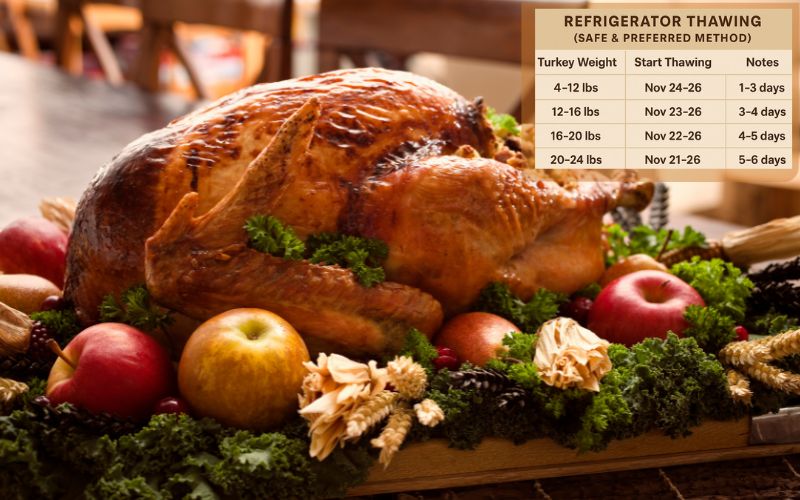
Refrigerator Thawing (Safe & Preferred Method)
| Turkey Weight | Start Thawing (Fridge) | Notes |
|---|---|---|
| 4–12 lbs | Nov 24–26 | 1–3 days; safe in fridge until cooking |
| 12–16 lbs | Nov 23–26 | 3–4 days; safe in fridge until cooking |
| 16–20 lbs | Nov 22–26 | 4–5 days; safe in fridge until cooking |
| 20–24 lbs | Nov 21–26 | 5–6 days; safe in fridge until cooking |
Once thawed, the turkey can be kept in the refrigerator for 1–2 days before cooking.
For those who haven’t planned ahead, other safe options are available.
Cold water thawing involves keeping the turkey in its original packaging and submerging it in cold water, changing the water every 30 minutes.
If the turkey isn’t fully covered, it should be rotated regularly, and it must be cooked immediately after thawing.
Microwave thawing is also an option, though it requires careful attention to ensure all parts of the bird thaw evenly.
Like cold water thawing, microwaved turkeys should be cooked immediately.
Following these guidelines ensures a turkey that is fully thawed, safe, and ready for the holiday table.
While refrigerator thawing is the preferred method, cold water or microwave thawing can be effective for those short on time, helping families enjoy a worry-free Thanksgiving feast.


