


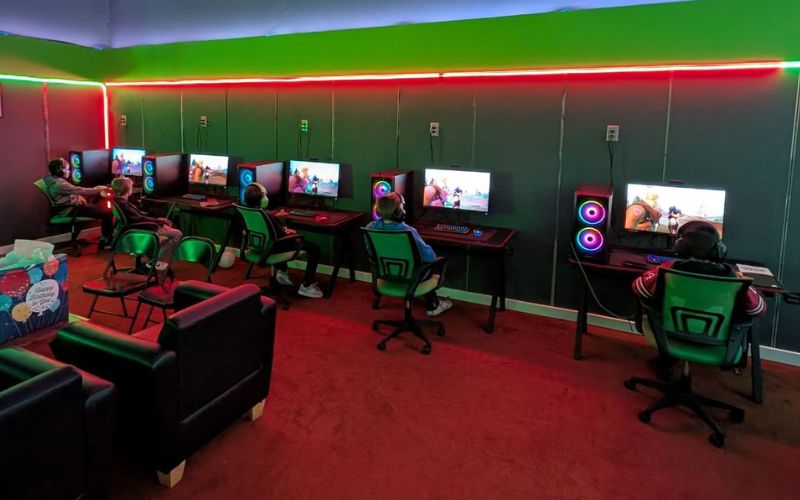
 What began as a long-standing dream between two lifelong gamers and former bowling teammates has quickly grown into one of the region’s most ambitious grassroots esports initiatives. BIO Esports, founded by Dylan Legge and Trent Nicholl, officially opened its doors on August 1, after spending early summer securing and building out the space—a process that took about a month. The goal was clear from day one: create a home where competition, community, and gaming could thrive together.
A major part of BIO’s mission is supporting school-based esports, and the most structured example is the Bellefontaine High School esports program. Students who participate pay $100 per month, which guarantees dedicated practice time and includes 40 hours of gameplay outside of scheduled competitions and team activities. This investment ensures consistent access and structure for athletes who want to take esports seriously.
Beyond the Bellefontaine team plan, BIO Esports also offers general memberships for the wider community. For just $8 per hour, anybody can come in to play games during business hours, with a $25 gaming pass for the day. For membership options, $40 gets you 28 hours for the month, and $80 earns 80 hours. Memberships expire every month. The venue also hosts birthday parties—two-hour celebrations for $250 with unlimited guests—giving families a unique and energetic event option.
Tournaments were part of the vision from the start. Shortly after opening, BIO held its first large event, the Fortnite Pineapple Palooza Championship. An unexpected game update forced a delay, but after three weeks of qualifiers, the final competition drew 16 enthusiastic players. Competitors battled on high-end PCs, something many had never experienced before. September tournaments saw lighter participation, but organizers say they are committed to growing competitive turnout over time.
 BIO Esports proudly owns all of its gaming equipment, a testament to the founders’ long-standing goal of building a program from the ground up. Both Legge and Nicholl grew up gaming and competing in traditional sports—especially bowling—which fueled their love of strategy, competition, and the thrill of organized play.
Today, BIO supports several area teams. Bellefontaine’s roster currently includes four permanent players and three substitutes, with a target roster size of 15. Hi-Point serves as the competition home for teams from Riverside and Upper Scioto Valley, while nearby Indian Lake continues to be a standout program, having won a Fortnite state championship after securing a major technology grant years ago.
BIO’s competition schedule is consistent and structured. All matches begin at 4 p.m. on private servers to ensure fair play. Fortnite teams compete on Mondays with a two-game format, while Apex Legends squads compete on Wednesdays, playing three matches. These two titles are the core of the BIO competitive ecosystem.
Legge offers comment about how the program got started and talks about the big misconception about gaming.
Every match is streamed live on YouTube and Twitch under @bioesports937, giving families, fans, and the broader gaming community a front-row seat to the action. Behind the scenes, support from Jason Calton and the local school principal has helped streamline communication, structure, and league organization.
From structured school programs to community memberships, from birthday parties to competitive leagues, BIO Esports has quickly become a hub for young gamers looking to hone their skills and experience the excitement of organized play. With solid foundations and growing interest, the program’s next level is only just beginning.
All photos courtesy of the BIO ESports Facebook page.


