The following has been submitted by the Logan County History Center.
By: Mary E. Mortimer
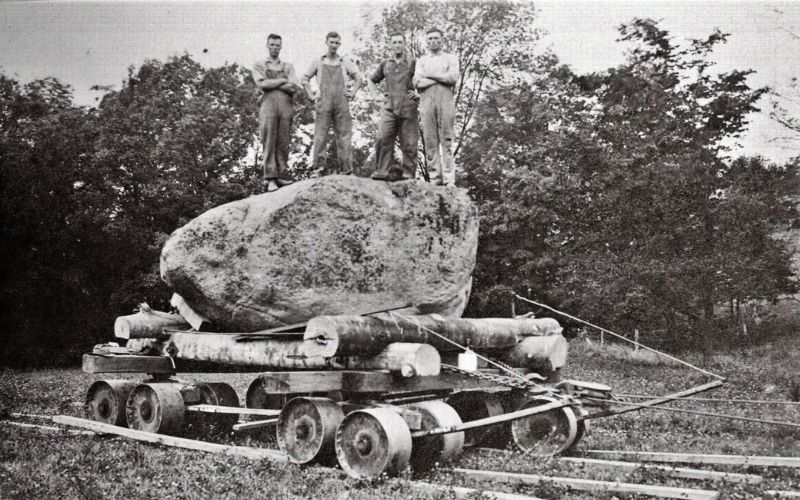
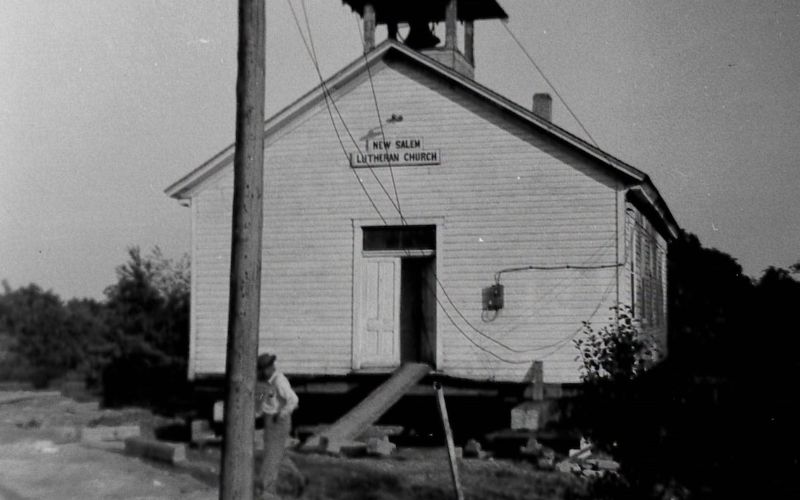
Born in 1884 at Pottersburg in Union County, Ohio, Clarence H. Gibson built a remarkable career out of moving what most people would have considered impossible. Beginning at just 14 years old, he spent more than five decades razing and relocating buildings, retiring in 1956 at the age of 73. Among the many jobs that made him locally known, none was more memorable than his 1914 move of a 60-ton boulder from the J.B. Adams farm on Bristle Ridge to Zanesfield for the Zane Kenton Monument.
The boulder’s three-mile journey was a feat of patience and ingenuity. Using a horse, a capstan, and a large platform fitted with rollers, Gibson took two weeks to bring the massive stone into Zanesfield. Once there, it required another five days to set it upright. The monument’s foundation was equally substantial, requiring 32 barrels of cement. The completed Zane Kenton Monument was formally dedicated in September 1914. For his work, Gibson received $325.
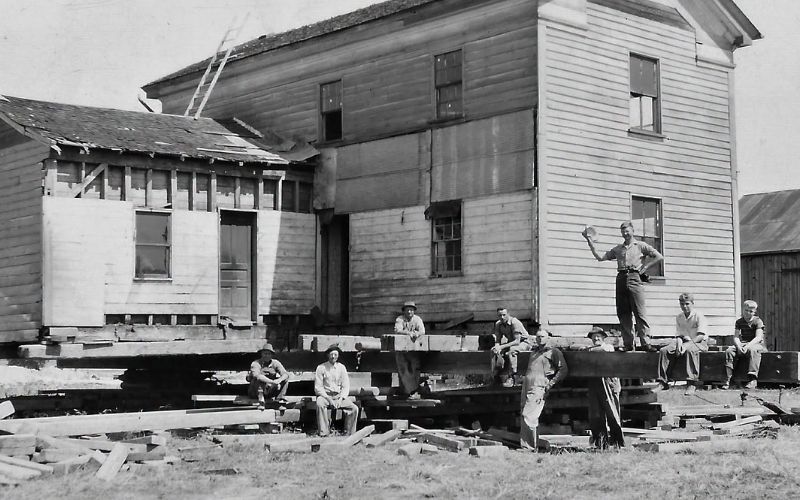
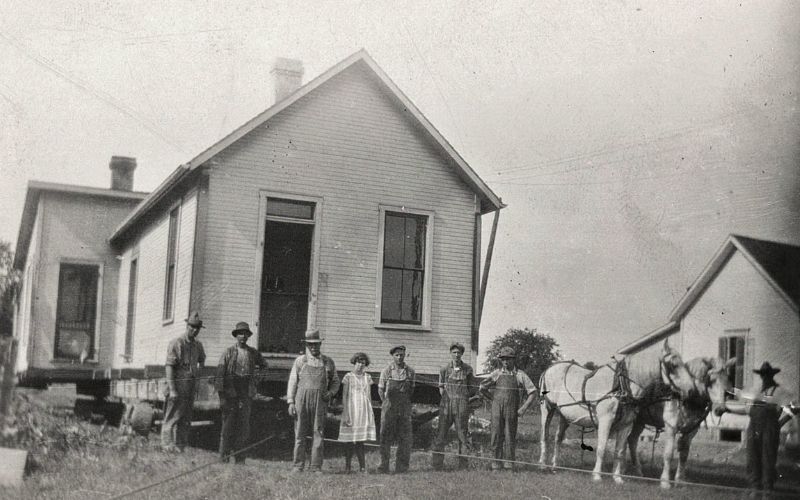
Gibson’s reputation rested not on a single accomplishment, but on a long list of extraordinary moves. In 1927, he turned the brick home at the corner of Sandusky Street and Bellefontaine Street in Zanesfield by 90 degrees. Afterward, the building served for years as a gas station and later became known as Artom’s General Store before eventually returning to residential use. During the 1930s, Gibson moved the Slemmons’ family farmhouse on County Road 44 from a location 2,000 feet back from the road to a point just 150 feet away. Using a team of horses and a windlass winch, he completed the move so carefully that the dishes left in the cupboards remained unbroken.
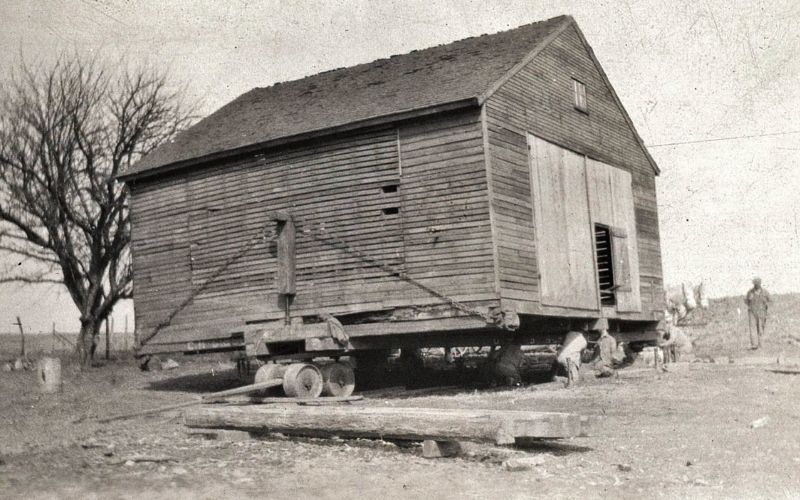
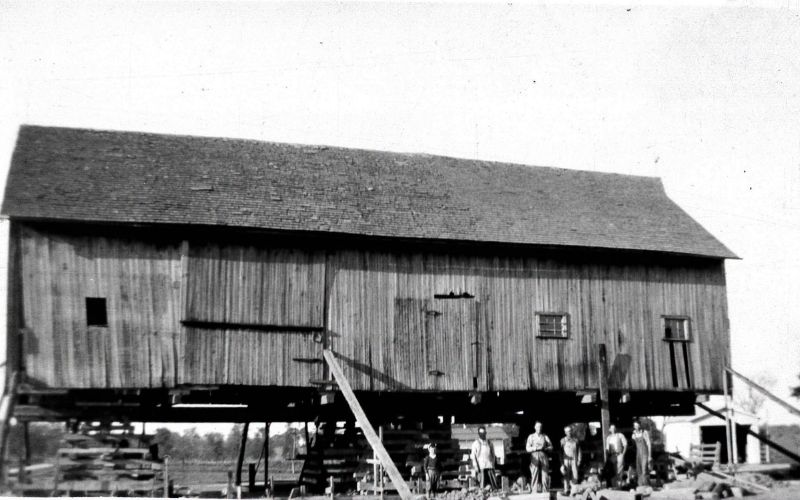
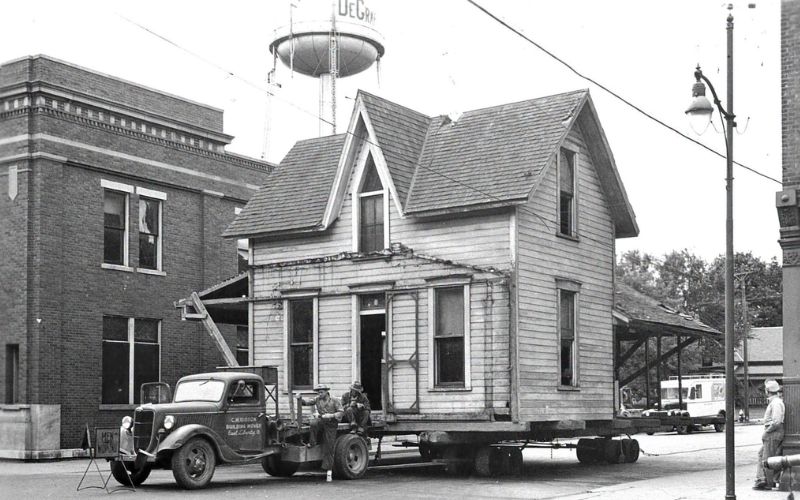
Stories about Gibson’s skill continued to circulate for years. In 1943, Edgar Hall recalled that Gibson had moved a barn for him near Rushsylvania and transported a building for Lew Taylor four miles across fields to a property southeast of Marysville. Hall also remembered, “Gibson moving a house down a hill near Zanesfield with green poles used on the steel wheels as pries and brakes.” Though buildings sometimes blew off their jacks after being moved, Hall noted that Gibson never lost one while it was on rollers. In 1948, Gibson relocated Lyman Means’ gas station building from East Liberty to Rushsylvania, a distance of 12 miles, where it was converted into a residence.
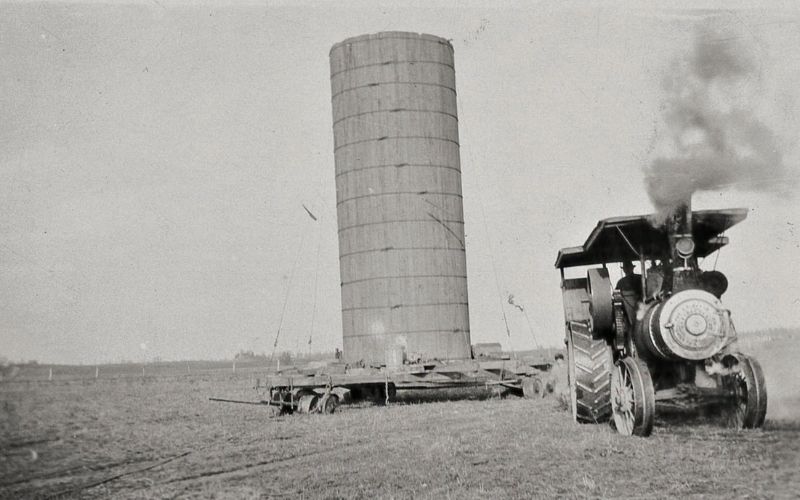
Living most of his life in East Liberty, Gibson spent more than 55 years moving barns, silos, churches, houses, and other oversized structures. He died in 1957, leaving behind one of the most unusual and impressive careers in Logan County history.
Visit the Logan County History Center to learn more interesting aspects of Logan County History. The History Center is open for tours Wednesday – Sunday from 1:00 pm to 4:00 pm. Admission is free.