



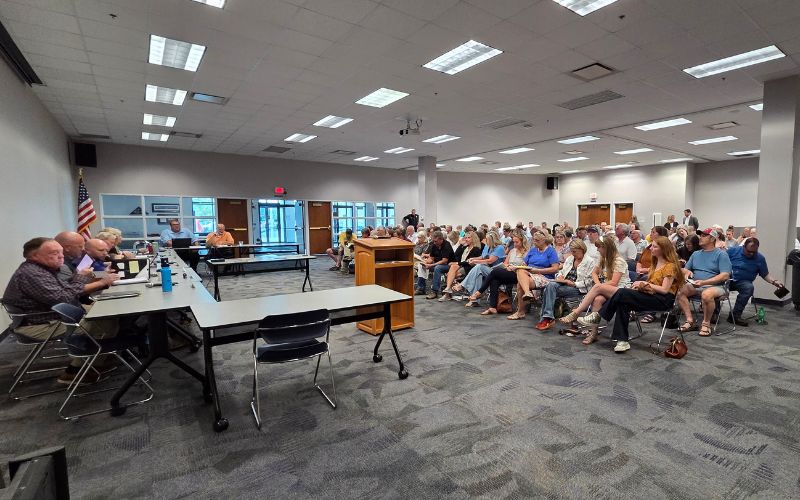
The Urbana City Council met Tuesday evening, approving the final reading of a new investment and depository policy while hearing a statement from Mayor Bill Bean responding to the recall petition filed against him.
Council also entered executive session to conference with legal counsel regarding pending or potential litigation.
Mayor addresses recall effort
Bean strongly denied the allegations made against him, saying they are based on public records taken out of context.
“I need to address the recall petition directly and without hesitation. The allegations being circulated about me are false, distorted, and built on selective readings of public records that were taken out of context.”
Bean said he has not violated his oath of office, lied to the public or personally benefited from any development project. He also said he encouraged those making accusations to file a complaint with the Ohio Ethics Commission, adding that to his knowledge no action was ever taken.
He concluded by saying he will continue serving the city “with transparency, honesty, and professionalism.”
Investment policy adopted
Council approved the final reading of an ordinance adopting the city’s first formal Investment and Depository Policy, establishing guidelines for how city funds may be invested and managed.
Data center committee continues work
The Data Center Moratorium Committee continues working toward a final report for City Council this fall. During its June work session, members heard presentations on Urbana’s finances, utility capacity and potential economic impacts of data center development. The committee also discussed possible financial safeguards, including requiring developers to fund infrastructure improvements, independent expert reviews and decommissioning costs should a project ever be approved.
CRA discussion answers residents’ questions
Following a separate Community Reinvestment Area (CRA) work session, several residents stayed to ask questions about how CRA agreements work.
Officials explained that CRA agreements do not automatically grant tax abatements but give local governments the option to negotiate incentives for residential, commercial or industrial development. Any agreement must be approved by the city and can include performance requirements that developers must meet.
Officials also discussed Ohio’s mega-project law, explaining that while it was created to attract large investments such as Intel, Honda and Anduril projects, many data centers do not qualify because they typically do not meet the required payroll thresholds.
The next scheduled meeting is set for Tuesday, August 4.


