
The following story has been submitted by the Logan County History Center.
By: Beth Marshall
Starting in the early 1860s, a variety of performances, including theatrical troupes, musical groups, lecturers, and local school and church productions, were held at Melodeon Hall on South Main Street.
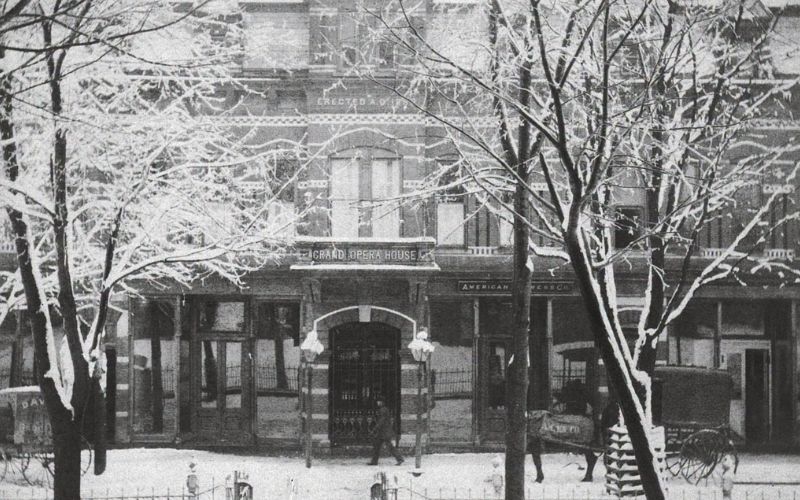
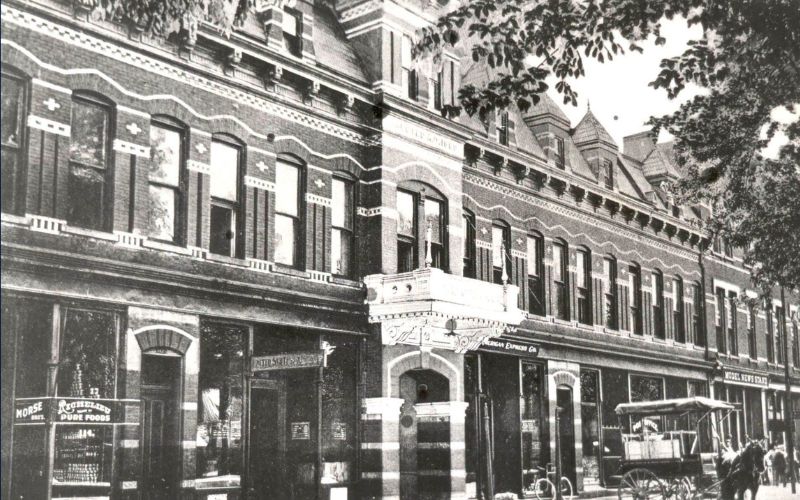
In 1879, a group of investors including Gen. Robert P. Kennedy, W.V. Marquis, Capt. T.L. Hutchins and James Cowman decided that Bellefontaine could attract some of the best performers from all over the country. The railroad had opened the town, and what was needed was a larger performance hall. The Opera Block was constructed on the east and south sides of the Empire Block, on Court Ave. and Main Street south of the Courthouse, in 1880. The Grand Opera House was situated in the rear and was reached through a main entrance on Court Ave. The first performance was the operetta “The Chimes of Normandy” on December 23, 1880. As an added attraction, Prof. L.G. Wooley, Electrician, from Ridgeway, Ohio, lit up the Opera House with the first electric lights in Logan County. He hired a traction engine to power the lights, with one hanging from the dome inside and another on the street outside. It was said that the light could even be seen in the eastern suburbs and created great excitement. This was 17 years before Bellefontaine had an electric light plant.
A hallway with light grey decorations and hanging brass light fixtures led visitors to the Grand Opera House. The hallway walls were decorated with photos and lithographs of famous actors, actresses, and plays, including one of Bellefontaine’s famous “Flying Jordans” aerialist troupe who performed with major circuses including Ringling Brothers.
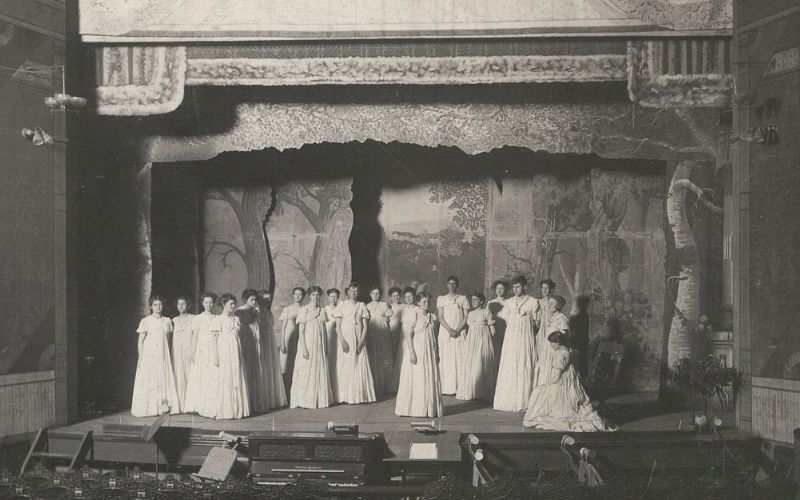
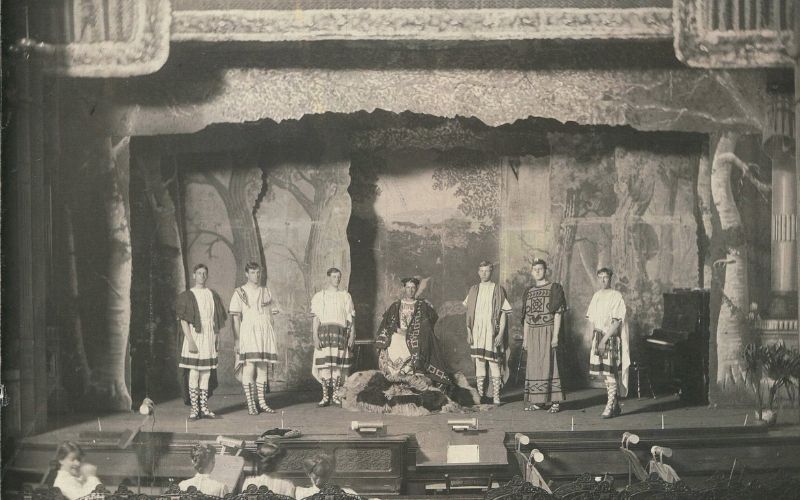
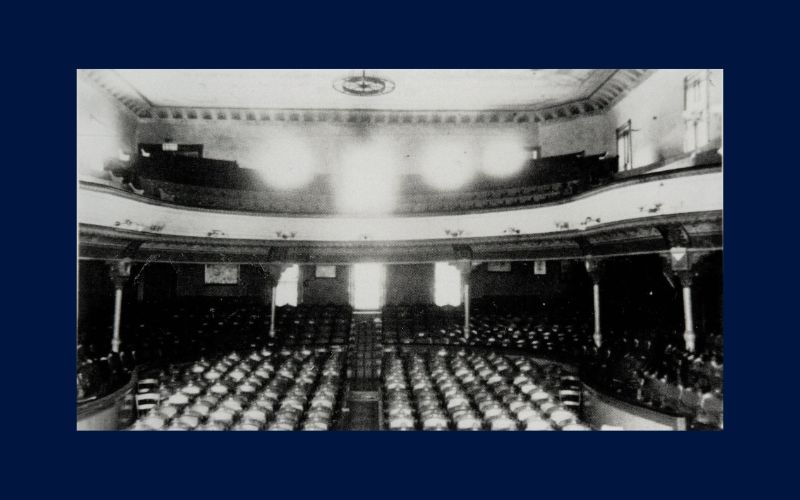
The Opera House seated 956 on the main floor and balcony. An asbestos curtain in accordance with fire laws was across the stage. When it went up, there was a red velvet curtain that matched the upholstery on the chairs in the boxes on either side of the stage for the “elite” guests. Around the stage were frescoes with scenes from Greek mythology, plaster cherub faces, and two large mirrors in elaborate silver frames. There was an orchestra pit in front of the stage for the six musicians, and two dressing rooms on either side of the stage.
Some shows counted on local stage sets, with furniture often borrowed from Kennedy’s Furniture and Funeral Parlor. Other shows brought their own sets with local workers hauling them from the railroad. Bellefontaine was on the “New York circuit” with many well-known actors and programs coming to the Opera House, including Buffalo Bill Cody, John Philip Sousa, Lillian Langtry, the Chicago and Pittsburgh Symphonies, and magicians, Kellar, Bancroft, Durbin, and possibly Houdini. In addition, there were many local performances with area talent, school commencements, benefits, and church-sponsored programs at the Opera House.
The Grand Opera House operated for more than twenty-five years with many changes in management. Curtis V. Smith was manager from 1905-1917 and collected stage bills and programs from many of the early performances. His scrapbook has been donated to the Logan County Historical Society archives.
Daniel Gutilla was the next manager, and in addition to having stage shows, he converted the Opera House into a movie theater for silent pictures with the first ones being accompanied by a Victrola. In the late 1920s, Harry Moller remodeled the theater and equipped it for sound pictures, calling it the Court Theater. Due to poor sound conditions and various other factors, the Court Theater soon closed. A movement was started in the 1930s to restore the Opera House but had no success. The Grand Opera House was torn down in 1956, saddening many area residents whose memories were of the wonderful times they’d had there.
=