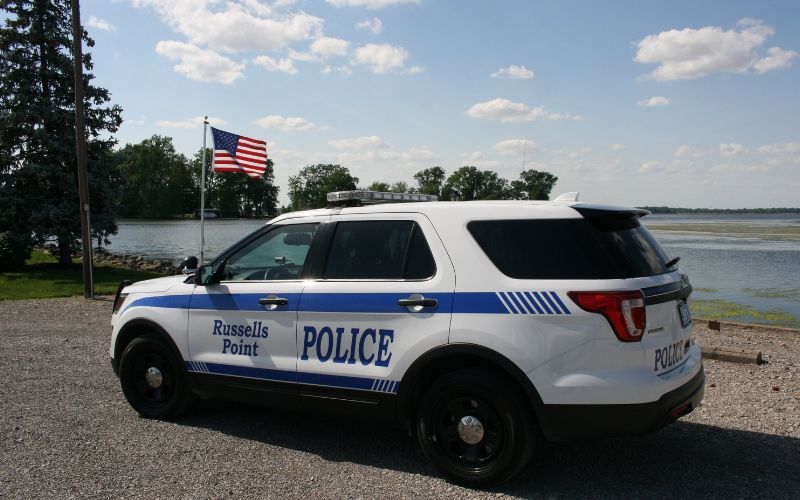
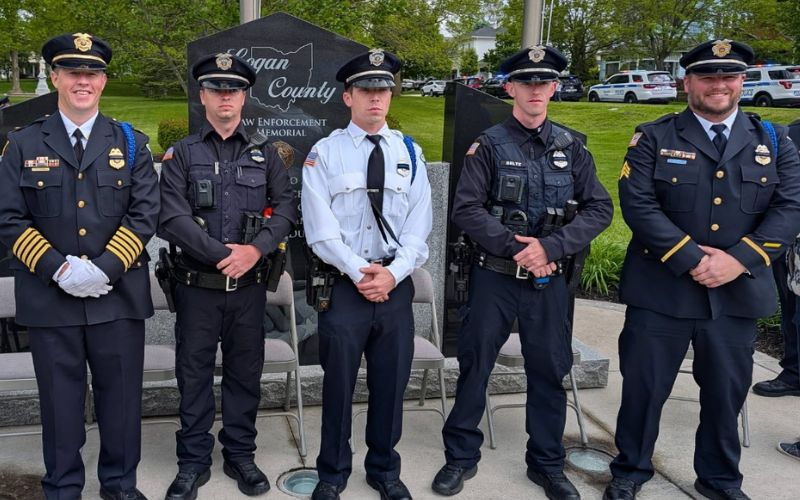
Paul Harvey once described a police officer as “a composite of what all men are,” a mix of strengths and imperfections, expected to be a protector, counselor, diplomat, first responder, and, sometimes, simply the person someone needs in a difficult moment.
After spending time with the Russells Point Police Department, it is easy to understand what he meant.
I have had the opportunity to get to know a number of law enforcement officers throughout my career.
I have written about deputies who serve their communities and firefighters who run toward danger while everyone else is running away.
When I wanted to take a closer look at small-town policing, Russells Point seemed like the perfect place to start.
There is sometimes a perception that small-town officers are somehow the Barney Fifes of law enforcement — officers who could not make it in a larger city or with a county department.
After spending time with the men of the Russells Point Police Department, I can tell you that could not be further from the truth.
This close-knit group brings together experience, discipline, military backgrounds, hard knocks, fatherhood, ministry, and some fresh ideas about what policing can look like.
They may have different personalities and different approaches, but they share something important: they care about their village.
They want to make a difference on the streets of Russells Point, whether that means getting drugs out of town, helping someone through a crisis, shooting hoops with local kids, showing up at a high school football game, helping someone who just crashed their car, or simply explaining to a driver why running a stop sign can have serious consequences.
These officers are there.
Sergeant Morgan Styles
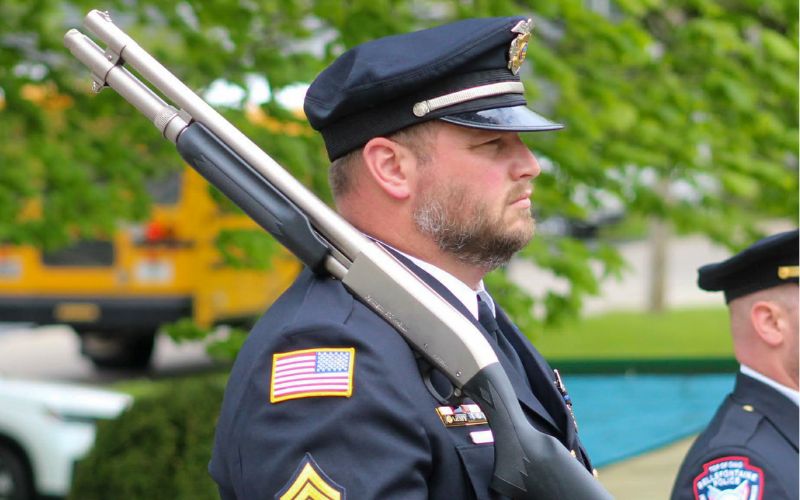
On a recent ride-along with Sergeant Morgan Styles, one thing became clear pretty quickly — this is a man who does not really have an “off” switch.
From the moment he puts on his vest and tells dispatch he is on duty, he is focused on the job.
Styles is quick to help neighboring departments and approaches people with compassion and understanding, even when circumstances are difficult.
During our first stop, two people were arrested. The woman involved was concerned about belongings left inside the vehicle. She was both a victim and a criminal in that situation.
Styles treated her with respect, gathered the things she requested, and remained calm even when she became upset and frustrated.
He never raised his voice or allowed the situation to become personal.
Styles is a no-frills, straight shooter. His military experience shows in his discipline, grit, and willingness to keep going when the job gets difficult.
That first call also offered a glimpse into something that is easy to overlook from the outside: law enforcement is rarely a one-person job.
Officers and deputies checked on one another, made sure the situation was under control, and offered help wherever it was needed — including some who were off duty.
There was a sense of teamwork that you do not always get to see.
Chaplain Joe Angles
Even with all the training and toughness, officers are human.
They see things most people never will. They deal with difficult calls, difficult people and difficult decisions.
And sometimes, they need someone to talk to.
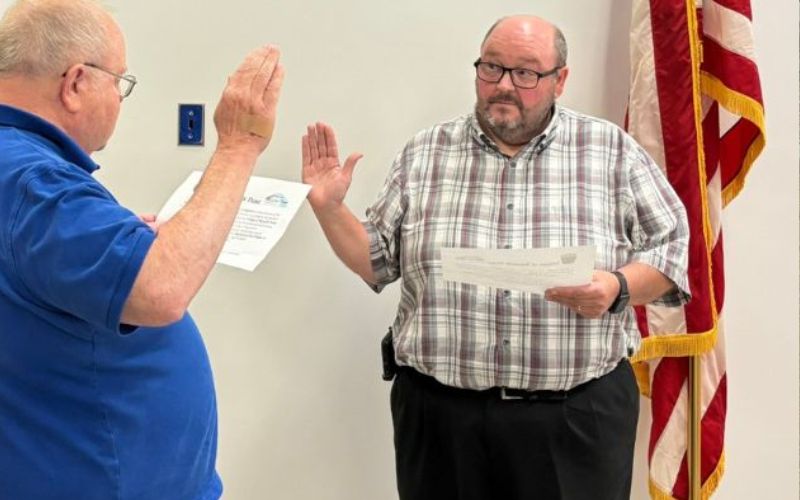
That is where Chaplain Joe Angles comes in.
For Angles, being a first responder chaplain is about much more than showing up when something goes wrong.
He has spent 11 years serving part-time at the Russells Point Church of God, while his full-time career has been in behavioral health. He has also worked as a mental health therapist at Tecumseh schools.
As he became more involved in village events and community activities, he developed relationships that eventually led him to become a Heroic Deeds First Responder Chaplain.
Angles completed his chaplain training in the summer of 2025.
Today, he supports local officers and their families, but his work extends into the community as well.
He sees firsthand the challenges facing families, including broken homes, children caught in difficult situations, mental health struggles and drug use.
For Angles, the most rewarding part is often the simplest — the relationships.
He is grateful the community has welcomed him into the role and supports his work with local law enforcement.
He is also proud of the officers he serves alongside, particularly the way they handle difficult situations with care and professionalism.
Officer Patrick Stolzenburg
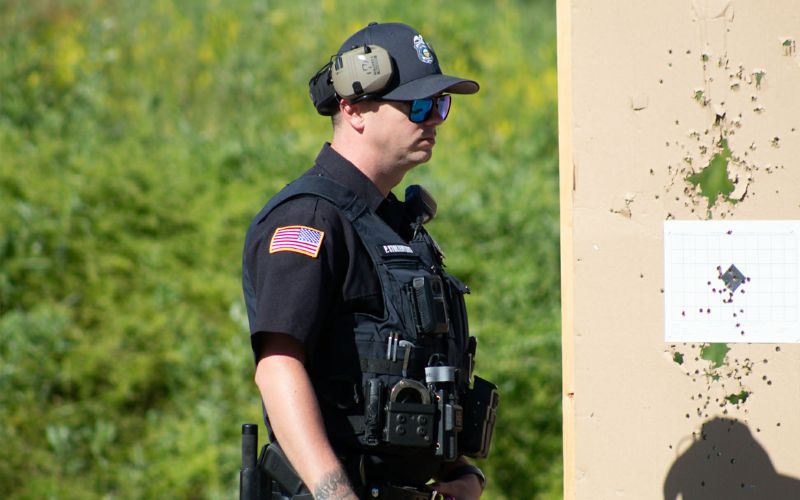
Officer Patrick Stolzenburg represents another evolving side of modern policing.
For Stolzenburg, the question after a police call is often: What now?
In March 2026, Stolzenburg began serving as Russells Point’s Deflection Officer and Outreach Coordinator through an Ohio Attorney General’s DART grant, which will continue through at least 2027.
Instead of simply responding to an overdose, addiction issue, or mental health crisis and moving on, Stolzenburg follows up.
He helps people connect with treatment, recovery, and other local resources.
The idea is simple: address the immediate crisis, but do not forget about the person once the call is over.
Stolzenburg brings his own experiences with mental health and substance abuse to the job. He knows people can turn their lives around.
He wants people to see him as a person — not simply another police officer or a case number.
Sometimes his job is simply to listen.
Other times, it means helping someone navigate a system that can be overwhelming and connecting them with organizations such as Recovery Zone, TCN, Coleman Health Services, and Community Health and Wellness Partners.
But Stolzenburg is also a police officer in the traditional sense, making traffic stops, responding to calls for help, and handling the numerous “typical” duties that come with wearing the badge.
Officer Westly McVety
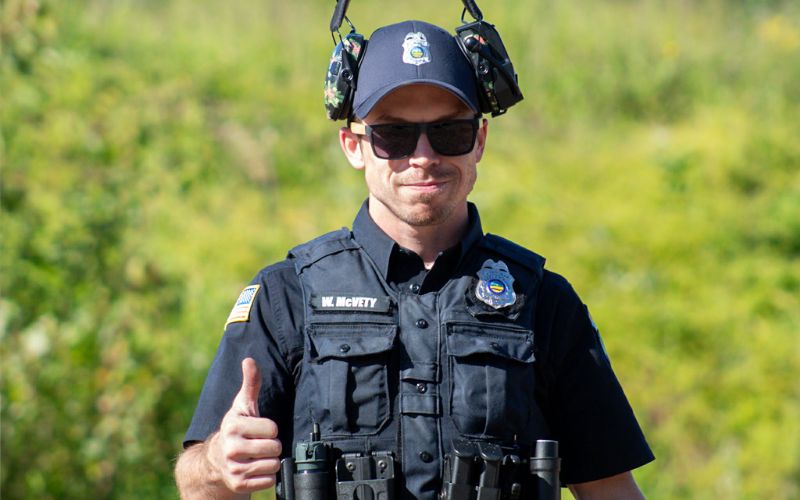
Officer Westly McVety is a Marine Corps veteran, and I initially thought he would be the toughest nut to crack.
He was quite the opposite.
I sat with him at the table in the department office for about two hours and simply asked him to tell me his story.
What emerged was a picture of someone who is passionate about helping others, even though he carries a tough-guy exterior.
McVety is a new officer with just under a year of experience, but he already has a tremendous heart for people.
When I asked why he became a police officer, he explained that after becoming a civilian, he missed the camaraderie and drive he experienced while serving in the military.
Law enforcement offered him some of that same sense of purpose.
McVety is disciplined and driven, but what seems to matter most to him is the opportunity to help others while helping make the community better and stronger.
Officer Zak Beltz
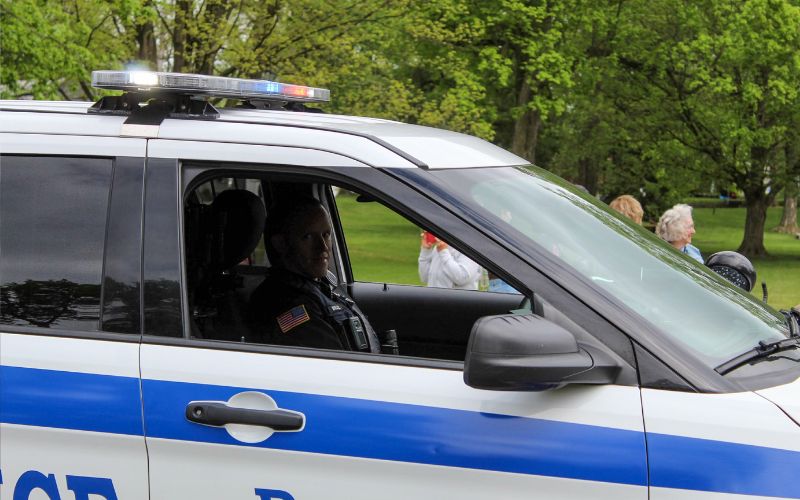
Officer Zak Beltz was a little uncomfortable when I first climbed into his cruiser.
He admitted that he was nervous because he had expectations about how the ride-along would go.
I told him I was not expecting anything other than his normal day.
Eventually, he relaxed.
He spent the morning making traffic stops and conducting business checks, including checking closed businesses to make sure doors were secure.
As the morning continued, Beltz became more comfortable and began opening up.
One thing quickly became obvious: this man loves kids.
He talked about his own children and then about the children in the community.
He spoke about stopping in the mornings at the bus stop on Lincoln Boulevard, talking with the kids, giving them a hard time about being good, and reminding them to do their homework.
He smiled when he talked about it.
Beltz also carries commissions with several other departments and works in other communities on his days off.
He enjoys checking in with those communities and maintaining the relationships he has built there.
At the end of our ride-along, we responded to a domestic violence call with a deputy from the Logan County Sheriff’s Office.
I will not discuss the details of that call, but watching the two agencies work together to help a family was another reminder that effective policing extends well beyond making an arrest.
There was follow-up after the initial call, and there will continue to be assistance.
Two local agencies, working toward the same goal: helping people.
Police Chief Joe Freyhof
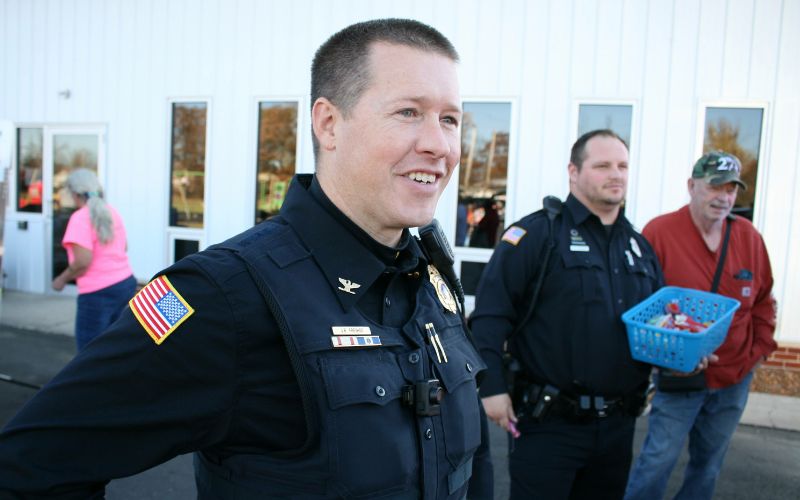
Russells Point Police Chief Joe Freyhof has served as the village’s chief since 2006, bringing nearly two decades of law enforcement experience and community service to Indian Lake.
His career began in education. Freyhof earned a bachelor’s degree in music education from Wright State University in 2003 before attending the Clark State Police Academy and earning his peace officer certification.
Before becoming police chief, he served as chief bailiff for Bellefontaine Municipal Court, where he coordinated jury trials and court proceedings, worked with inmate transportation and bench warrants, and helped modernize courtroom security policies and procedures.
Freyhof has completed numerous advanced certifications and instructor courses, including cross-training in fire and EMS. In 2020, he completed the 24th Certified Law Enforcement Executive program.
He also serves as vice president of the Ohio Association of Chiefs of Police, chairs the association’s Patrolling Chiefs Committee and serves as vice chair of its Education Committee.
His community involvement extends beyond the police department.
Freyhof is a volunteer firefighter with the Indian Joint Fire District, a peer support volunteer with the Logan County Critical Incident Stress Management Team, and a co-coordinator for the Logan and Champaign County Crisis Intervention Team.
Outside of work, he enjoys supporting his family, including cheering on his bonus daughters at sporting events and supporting his sons, who are sophomores at the University of Cincinnati.
I have known Joe for several years, and I will tell you something that might surprise people who only know him professionally.
He cares deeply about people.
He can be rough around the edges. He can come across as confident — sometimes very confident — and he certainly has a personality that fills a room.
But underneath that exterior is someone who cares about his officers, his community, and the people he serves.
If it were required of him, I truly believe he would give someone the shirt off his back.
That is the part of Chief Freyhof that may not always be visible from behind the badge.
Chief joined me for Listen Up! Sunday morning on 98.3 WPKO:
Small Town. Big Responsibility.
What stood out most during my time with the Russells Point Police Department was that these officers do not fit neatly into one description.
They are cops, but they are also neighbors.
They are parents, veterans, mentors, counselors, and community members.
They enforce the law, but they also understand that sometimes the best outcome is helping someone avoid coming back through the same door again.
Small-town policing may not always get the recognition it deserves.
But behind the badge are people putting in the hours, answering the calls, and trying to make their little corner of the world better.
And maybe that is the part of policing we do not hear about often enough.
Not the arrest.
Not the flashing lights.
Not the statistics.
The people.