



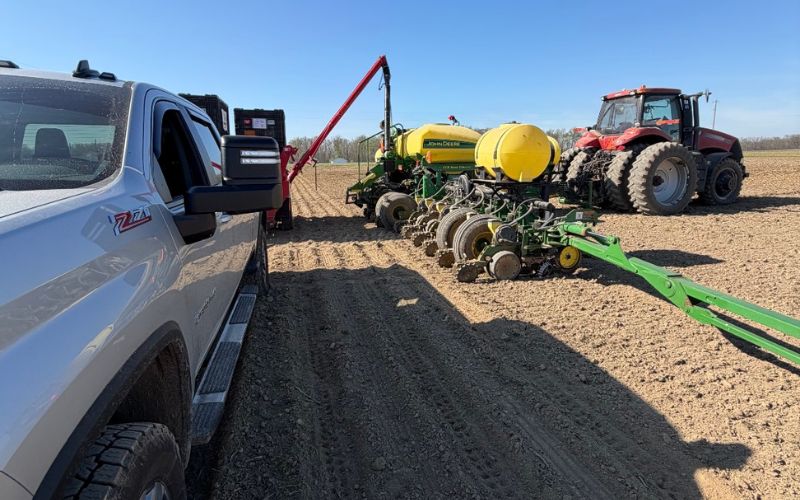
As spring planting is well underway across Ohio, both farmers and drivers are being reminded to stay alert and share the road during one of the busiest times of year in rural areas.
With longer days and warmer weather, tractors, planters, and other large farm equipment are traveling between fields—often on public roads.
These vehicles typically move under 25 miles per hour, which can catch drivers off guard and increase the risk of crashes.
Safety experts say patience is key.
Drivers should slow down, avoid passing unless it’s clearly safe, and be ready for wide turns at intersections and field entrances.
Farm equipment can take up more than one lane and needs extra space to operate safely.
Visibility can also be an issue, especially early in the morning or late in the evening.
While most equipment is marked with reflective signs and flashing lights, it can still be difficult to see if drivers aren’t paying close attention.
For farmers, safety starts before heading into the field.
Checking lights, brakes, and slow-moving vehicle signs can help prevent breakdowns and reduce risks.
During long days, taking breaks, staying hydrated, and watching for hazards like overhead power lines can help prevent injuries.
At the same time, many farmers are facing financial pressure this season due to rising fertilizer and fuel costs.
A recent survey from the American Farm Bureau Federation found that 70% of farmers say they can’t afford all the fertilizer they need this year.
The survey included more than 5,700 farmers nationwide.
The impact varies by region.
Nearly 80% of farmers in the South reported they’re unable to afford enough fertilizer, followed by 69% in the Northeast and 66% in the West.
In the Midwest—including Ohio—about 48% of farmers said the same.
Even among farmers who planned ahead, shortages remain.
About two-thirds of Midwestern farmers pre-ordered fertilizer, but nearly one in three still didn’t secure enough supply.
Global issues are also contributing to the problem.
Conflict in the Middle East and disruptions near the Strait of Hormuz have affected the flow of key materials and fuel, pushing prices higher worldwide.
Farm Bureau data shows nitrogen fertilizer prices have increased more than 30%, while fuel and fertilizer costs overall are up between 20% and 40%.
Urea prices alone have risen nearly 50% since late February.
Because of these costs, some farmers say they may cut back on fertilizer use this spring or delay purchases, which could affect crop yields.
Even with those challenges, safety remains the top priority as planting season continues.


